
Environmental Communication and the Public Sphere: A Comprehensive Plan
The sixth edition of this crucial text‚ available as a PDF‚ explores vital connections between communication‚ environmental issues‚ and public engagement for a sustainable future.
Environmental Communication is a rapidly evolving field dedicated to understanding how people perceive and respond to environmental challenges. This discipline examines the diverse ways information about the environment is disseminated‚ interpreted‚ and acted upon by individuals‚ communities‚ and policymakers.
The core of this field lies in recognizing that environmental problems aren’t solely scientific or technical; they are fundamentally communication challenges. Effective communication is paramount for fostering public awareness‚ influencing behavior‚ and driving meaningful change towards sustainability and environmental justice.

The 6th edition‚ accessible as a PDF‚ delves into these complexities‚ offering a comprehensive overview of the field’s history‚ key concepts‚ and contemporary strategies. It emphasizes the crucial role of the public sphere in shaping environmental discourse and action‚ providing a foundation for informed engagement.
The Role of the Public Sphere
The public sphere‚ as explored in the 6th edition PDF‚ serves as a critical arena for debating and negotiating environmental issues. It encompasses the diverse spaces – both physical and virtual – where individuals can come together to discuss matters of public concern‚ form opinions‚ and influence decision-making.
This sphere isn’t a monolithic entity; it’s a dynamic network of conversations‚ encompassing media outlets‚ social movements‚ community forums‚ and online platforms. Effective environmental communication relies on robust participation within this sphere‚ ensuring diverse voices are heard and considered.
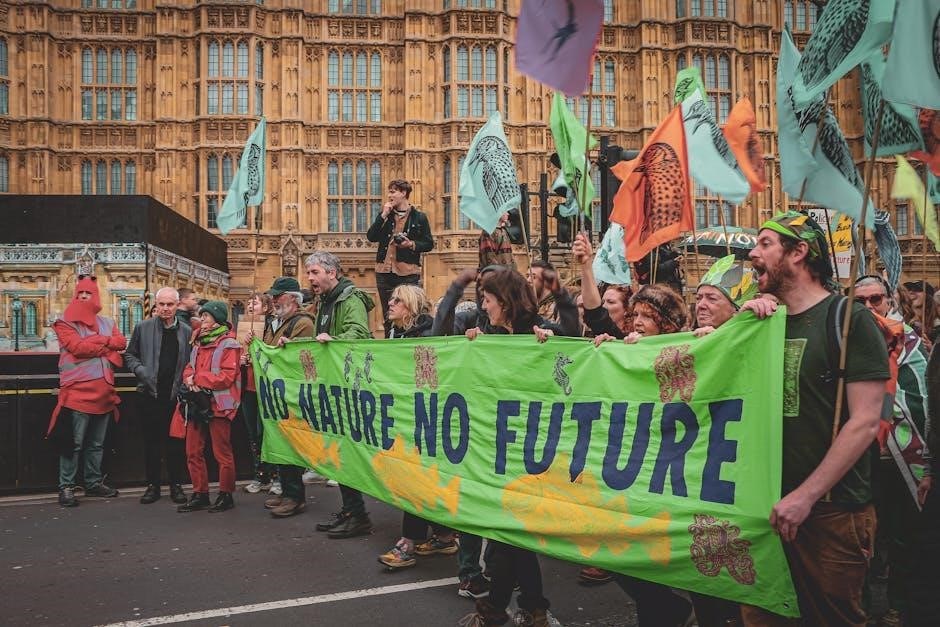
The book highlights how power dynamics and access to information shape the public sphere‚ impacting the framing of environmental problems and the potential for collective action. Understanding this interplay is vital for fostering a more just and sustainable world.
Historical Development of Environmental Communication
Tracing the evolution of environmental communication‚ the 6th edition PDF reveals a field born from early conservation movements and the rise of environmental awareness in the 20th century. Initially focused on promoting preservation‚ the discipline broadened with growing concerns about pollution‚ resource depletion‚ and ecological crises.
Early efforts often relied on scientific expertise and persuasive appeals to public morality. However‚ the field evolved to incorporate social sciences‚ recognizing the importance of understanding public perceptions‚ cultural values‚ and communication processes.
The book details how key events – like Silent Spring and the first Earth Day – catalyzed increased public engagement and shaped the trajectory of environmental communication as a distinct academic and professional field.
Key Concepts in Environmental Communication
The 6th edition PDF highlights core concepts central to understanding the complexities of environmental discourse. These include the recognition that environmental issues aren’t solely scientific‚ but deeply intertwined with social‚ political‚ and cultural contexts.
Central to the field is understanding how communication shapes public understanding and response to environmental challenges. The text emphasizes the importance of analyzing power dynamics‚ framing‚ and the role of narratives in influencing perceptions.
Furthermore‚ it explores how risk communication impacts public behavior and the ethical considerations inherent in conveying information about environmental threats‚ fostering informed decision-making.
Framing and Environmental Issues

The 6th edition PDF deeply examines how framing—selecting and highlighting certain aspects of an issue—significantly influences public perception of environmental problems. This process isn’t neutral; it shapes how audiences understand causes‚ consequences‚ and potential solutions.
The text illustrates how different frames can mobilize support or create resistance to environmental policies. For example‚ framing climate change as a public health crisis versus an economic burden elicits vastly different responses.
Understanding framing techniques is crucial for effective environmental communication‚ allowing advocates to strategically present information and counter misleading narratives‚ ultimately fostering more informed public discourse.
Risk Communication and Public Perception
The 6th edition PDF delves into the complexities of risk communication concerning environmental hazards. It highlights how public perception of risk isn’t solely based on scientific data‚ but is heavily influenced by factors like trust‚ cultural values‚ and personal experiences.
Effective risk communication requires transparency‚ acknowledging uncertainties‚ and engaging communities in the decision-making process. Miscommunication or downplaying risks can erode public trust and hinder effective responses to environmental threats.
The text emphasizes the importance of tailoring messages to specific audiences and utilizing clear‚ accessible language to ensure informed consent and proactive mitigation strategies.
The Sixth Edition of “Environmental Communication and the Public Sphere”
The 2022 sixth edition‚ published by SAGE Publications‚ builds upon previous iterations to offer a comprehensive exploration of the field. This edition‚ available as a PDF‚ continues the legacy started by Sara Miller McCune in 1965‚ supporting the dissemination of knowledge globally.
It expands its scope‚ encompassing new challenges and opportunities in environmental discourse. SAGE’s commitment to independence ensures unbiased perspectives. The book’s publication details confirm its rigorous academic standards and broad subject coverage‚ reflecting SAGE’s extensive catalog of journals and books.
Authors and Their Contributions (Pezzullo & Cox)
Phaedra C. Pezzullo‚ from the University of Colorado‚ Boulder‚ and J. Robert Cox‚ of The University of North Carolina at Chapel Hill‚ are the esteemed authors of this sixth edition. Their combined expertise provides a robust and nuanced understanding of environmental communication within the public sphere.
The authors meticulously crafted this work‚ ensuring it remains a cornerstone text for students and scholars alike. Their contributions are evident in the book’s comprehensive coverage and insightful analysis of contemporary environmental issues. The Library of Congress cataloging data formally recognizes their authorship and the book’s significance.

Publication Details and Scope (SAGE Publications‚ 2022)
SAGE Publications released the sixth edition in 2022‚ continuing its commitment to disseminating usable knowledge globally. Founded in 1965 by Sara Miller McCune‚ SAGE publishes over 1000 journals and 800+ books annually‚ covering diverse subjects. This edition builds upon SAGE’s extensive catalog of library resources‚ including archives and data.
The book’s scope is broad‚ encompassing the interplay between environmental concerns‚ communication strategies‚ and public discourse. Printed in the United States‚ it adheres to strict copyright regulations‚ prohibiting unauthorized reproduction. SAGE remains majority-owned by its founder’s estate‚ ensuring continued independence and academic integrity.
Environmental Communication Strategies
Effective environmental communication necessitates diverse strategies‚ ranging from grassroots advocacy to sophisticated media campaigns. Activism relies on compelling narratives and public mobilization to influence policy and behavior. Simultaneously‚ media representation significantly shapes public perception‚ often framing environmental issues in specific ways.
Understanding these dynamics is crucial for fostering informed dialogue and promoting sustainable practices. The book likely delves into techniques for crafting persuasive messages‚ navigating media landscapes‚ and building coalitions. Successful strategies require acknowledging diverse perspectives and addressing complex socio-political contexts to achieve meaningful change.

Advocacy and Activism Campaigns
Advocacy and activism campaigns are pivotal in driving environmental change‚ leveraging communication to mobilize public support and influence decision-makers. These efforts often employ strategic messaging‚ grassroots organizing‚ and targeted lobbying. Successful campaigns require a deep understanding of the issue‚ the target audience‚ and the broader political landscape.

The 6th edition likely examines case studies of impactful campaigns‚ analyzing their communication strategies and outcomes. It probably explores the role of framing‚ storytelling‚ and emotional appeals in galvanizing action. Furthermore‚ it may address the challenges of maintaining momentum and navigating opposition within these dynamic endeavors.
Media Representation of Environmental Issues
Media plays a crucial role in shaping public perception of environmental concerns‚ often acting as a primary source of information for many individuals. The way environmental issues are framed – whether as crises‚ opportunities‚ or simply news events – significantly impacts public engagement and policy debates.
The 6th edition likely analyzes how different media platforms (traditional news‚ social media‚ documentaries) portray environmental topics. It probably investigates the influence of journalistic norms‚ political biases‚ and economic pressures on media coverage. Understanding these dynamics is essential for effective environmental communication and advocacy‚ ensuring accurate and impactful messaging reaches diverse audiences.
Challenges in Environmental Communication
Effective environmental communication faces significant hurdles in today’s complex information landscape. Overcoming public apathy towards environmental issues remains a persistent challenge‚ often stemming from feelings of powerlessness or disconnect from the consequences. The proliferation of misinformation and “fake news” further complicates matters‚ eroding trust in scientific consensus and hindering constructive dialogue.
The 6th edition likely delves into strategies for addressing these challenges‚ exploring techniques for engaging diverse audiences and countering false narratives. It probably examines the psychological barriers to environmental action and the role of values and beliefs in shaping public opinion.
Overcoming Public Apathy
Combating public apathy requires reframing environmental issues to resonate with personal values and everyday experiences. Simply presenting scientific data often proves insufficient; instead‚ communication must emphasize the tangible benefits of environmental stewardship – improved health‚ economic opportunities‚ and community well-being.
The 6th edition likely explores the power of storytelling and emotional appeals in fostering engagement. It probably discusses strategies for building trust with skeptical audiences and highlighting the agency individuals possess to enact positive change. Connecting environmental concerns to social justice issues may also prove crucial in mobilizing broader support.
Addressing Misinformation and “Fake News”
Effectively countering environmental misinformation demands a multi-faceted approach rooted in scientific accuracy and transparent communication. The 6th edition likely emphasizes the importance of fact-checking‚ debunking false narratives‚ and proactively addressing common misconceptions.
Strategies may include partnering with trusted sources‚ utilizing compelling visuals‚ and employing clear‚ concise language. Furthermore‚ understanding the psychological factors that contribute to belief in “fake news” – confirmation bias‚ emotional reasoning – is crucial. The text probably explores the ethical responsibilities of communicators in navigating this complex landscape and fostering media literacy among the public.
The Impact of Digital Media on Environmental Discourse
Digital platforms have fundamentally reshaped how environmental issues are discussed and debated‚ creating both opportunities and challenges. The 6th edition likely examines how social media amplifies voices‚ facilitates rapid information dissemination‚ and enables the formation of online communities centered around environmental activism.

However‚ it also probably addresses the risks of echo chambers‚ filter bubbles‚ and the spread of misinformation. The text likely explores the role of citizen journalism in documenting environmental concerns and holding power accountable‚ alongside the increasing importance of strategic online communication for advocacy groups and organizations.
Social Media and Environmental Movements
Social media platforms have become indispensable tools for modern environmental movements‚ enabling rapid mobilization and global reach. The 6th edition likely details how activists leverage platforms like Twitter‚ Instagram‚ and Facebook to raise awareness‚ organize protests‚ and pressure policymakers.
These digital spaces facilitate the sharing of information‚ personal stories‚ and visual content‚ fostering a sense of community and collective identity among supporters; The text probably analyzes how hashtags and viral campaigns can amplify environmental messages‚ while also acknowledging the potential for online activism to translate into real-world impact and lasting change.
Online Activism and Citizen Journalism
The rise of online activism and citizen journalism significantly alters environmental discourse‚ empowering individuals to bypass traditional media gatekeepers. The 6th edition likely examines how individuals document environmental issues firsthand‚ sharing photos‚ videos‚ and reports directly with the public.

This democratization of information challenges established narratives and provides alternative perspectives often overlooked by mainstream outlets. Online platforms enable citizens to participate actively in environmental debates‚ fostering greater transparency and accountability. The text probably explores the ethical considerations and potential pitfalls of citizen journalism‚ alongside its powerful role in shaping public opinion and driving environmental action.
Future Trends in Environmental Communication

Looking ahead‚ environmental communication faces evolving challenges and opportunities‚ demanding innovative strategies. The 6th edition likely addresses the increasing urgency of climate change communication‚ emphasizing the need for effective messaging to motivate action and overcome polarization.
Furthermore‚ sustainability communication and corporate responsibility will be central‚ requiring communicators to navigate complex issues of greenwashing and promote genuine environmental stewardship. Expect exploration of emerging technologies and their impact on environmental discourse‚ alongside a focus on fostering inclusive and equitable communication practices for a more just and sustainable world.
Climate Change Communication
Effective climate change communication remains a paramount challenge‚ demanding nuanced approaches. The 6th edition likely delves into framing climate issues to resonate with diverse audiences‚ moving beyond scientific data to connect with values and emotions.
Expect discussion on overcoming psychological barriers like cognitive dissonance and motivated reasoning‚ alongside strategies for countering misinformation and fostering constructive dialogue. Communicators must navigate political polarization and advocate for evidence-based policies‚ while empowering communities to build resilience and adapt to a changing climate.
Sustainability Communication and Corporate Responsibility
This edition likely examines the growing role of sustainability communication in shaping corporate behavior and public perception. It probably explores how organizations articulate their environmental commitments‚ navigate greenwashing accusations‚ and build trust with stakeholders.
Expect analysis of sustainability reporting standards‚ ethical marketing practices‚ and the power of storytelling to inspire pro-environmental action. The text may also address the challenges of balancing economic growth with ecological integrity‚ and the importance of fostering a circular economy. Communicators play a vital role in promoting responsible consumption and production patterns.
Accessing the 6th Edition PDF
Currently‚ a preview of the “Environmental Communication and the Public Sphere‚” 6th edition PDF is accessible via Student eBook Hub. The URL provided‚ https://studentebookhub.com/wp-content/uploads/2024/preview/9781544387031.pdf‚ offers a glimpse into the book’s content‚ published on July 11‚ 2025.
However‚ full access may require purchase or institutional subscription. Users should be mindful of copyright restrictions‚ as the text explicitly states “No part of this book may be reproduced…” Ethical considerations are paramount when utilizing digital resources; respecting intellectual property is crucial for academic integrity and supporting authors.
Availability on Platforms like Student eBook Hub
The “Environmental Communication and the Public Sphere” 6th edition is currently previewable on Student eBook Hub‚ as of today‚ May 4‚ 2026. This platform offers a digital access point‚ with the preview PDF available at https://studentebookhub.com/wp-content/uploads/2024/preview/9781544387031.pdf.
While a full‚ free PDF download isn’t explicitly stated as readily available‚ Student eBook Hub often provides access options through purchase or institutional affiliations. Exploring their platform and checking with academic libraries are recommended avenues for obtaining the complete text. Remember to always verify legitimate sources and respect copyright regulations.
Copyright and Ethical Considerations
SAGE Publications explicitly states that all rights are reserved for “Environmental Communication and the Public Sphere‚” 6th edition. No reproduction or utilization – including photocopying‚ recording‚ or digital storage – is permitted without written consent from the publisher. This extends to any PDF versions‚ even those found online.
Accessing unauthorized copies constitutes a copyright violation. Ethical academic practice demands respecting intellectual property rights. While preview access may be available‚ obtaining the full text requires legitimate purchase or library access. Supporting authors and publishers ensures continued high-quality scholarship in environmental communication. Prioritize legal and ethical means of accessing this valuable resource.